Giving without claiming - Lessons from living with ferals
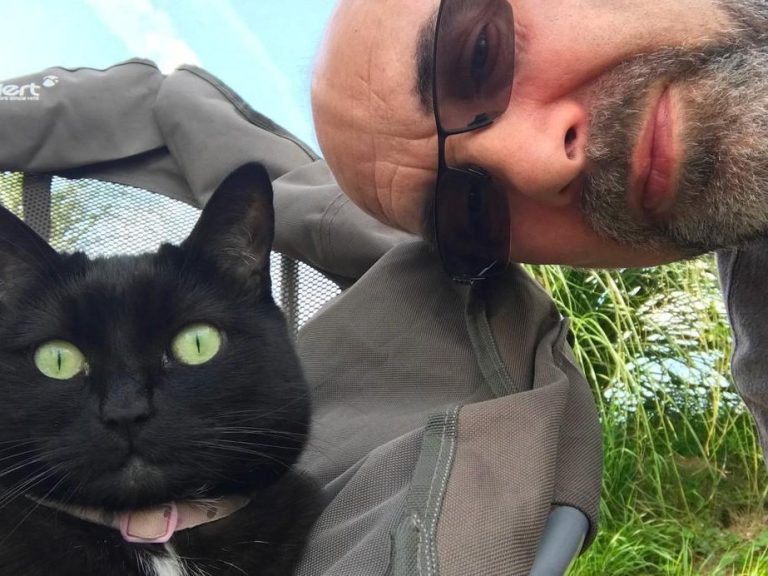
Guest article from Dr David Cliff, MD of Gedanken, a company specialising in coaching-based support and personal development.
This article was originally published in the October 2025 issue of Pets Magazine, the leading lifestyle magazine for pet parents.
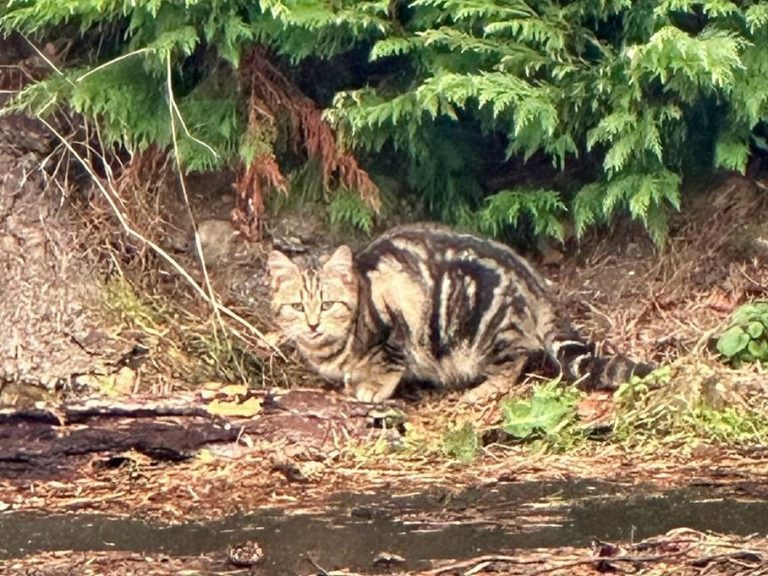
There’s a quiet ritual that begins most mornings in our garden. As the light stretches across the grass, shadows shift and small shapes emerge: the feral cats.
They are not pets, nor are they strangers. They live in a world half‑in, half‑out of ours — a world that demands respect for their independence, yet invites our compassion in equal measure. Caring for feral cats is a lesson in paradox. You want to offer safety, yet not strip away the instincts that keep them alive. You want to provide food and shelter, yet not create a dependency that undermines their nature.
It is a path paved with affection and tough choices, and one that few fully understand until they walk it themselves.
Walking the Line Between Care and Wildness
When I first began offering support to the ferals in our area, I imagined it might be simple: a little food, a little shelter, and we would all adapt together. But feral cats carry a legacy of mistrust born from survival. They watch with sharp eyes, ears flicking at the smallest sound, bodies always poised for flight. They remind us that unlike domesticated cats, they have not chosen us — they have tolerated us. And that distinction shapes every decision.
The temptation, of course, is to bring them closer. To coax them indoors, to tame them, to give them the softness of domesticity. But to do so risks unravelling what makes them who they are. Feral cats are not failed pets; they are successful survivors. Their wariness is not a flaw but an inheritance.
The Guidance of Kat-Zen
In navigating this delicate balance, I have been fortunate to draw on the wisdom of Dr. Sam Davies and her practice, Kat-Zen, whose work with animal behaviour has offered both practical strategies and moral clarity.
Kat-Zen does not romanticise feral cats, nor does it treat them as problems to be “fixed.” Instead, it frames them as beings with their own dignity, instincts, and place in the world.
Through Kat-Zen, I learned the principle of measured care — providing enough to support wellbeing, but not so much that you override natural rhythms. It is a discipline of restraint as much as generosity. A shelter, for example, must be warm enough to guard against harsh weather, yet discreet enough not to invite dependency or compromise safety. Food must be reliable, yet varied, so the cats maintain their foraging skills. Dr. Sam once described it as “giving without claiming.” That phrase has stayed with me. It captures the essence of what it means to live alongside ferals: generosity without expectation, kindness without ownership.
The Wider Community of Care
I would be remiss not to acknowledge the extraordinary work of Durham-based Coundon Feral and Stray Cat Rescue, whose team specialises in feral rescue with remarkable dedication. Their efforts, often unseen and unsung, reflect a deep commitment to ensuring these cats are not simply left to fend for themselves but are given the chance of safer, healthier lives. Working closely with local communities, Coundon carries out trap–neuter–return (TNR) programmes, provides emergency medical care, and creates networks of safe outdoor shelters.
They remind us that while individuals like me can do much in our own corners, it is the collective spirit of rescue groups that turns scattered acts of kindness into sustained change. I am deeply grateful for their guidance and support, which continues to shape the way I approach feral care. Feral cats have a hard life by any description. Disease, starvation, pregnancy, predators, and traffic all take their toll. The average life expectancy of a feral cat is under four years — a stark contrast to the 14 years commonly enjoyed by their domestic counterparts. Yet human intervention and support can make all the difference. Through thoughtful feeding, medical care, and responsible population management, we can extend both their survival chances and quality of life significantly.
Hard Choices, Gentle Hands There are, inevitably, hard choices. Illness, injury, or the threat of overpopulation through unchecked breeding all force us to step beyond the boundaries of observation and into intervention.
Spaying and neutering ferals is not always an easy path emotionally, but it is one of the most humane. It reduces suffering in the long run, sparing future generations the hardships of hunger, disease, and territorial conflict.
And then there are the moments of heartbreak. A feral may disappear one day and never return, leaving only questions behind. Another may appear injured, and you must decide whether to attempt rescue — risking their trust and your own safety — or to respect their distance and provide what comfort you can from afar.
I remember one winter watching a small tabby who had become a familiar presence, edging closer each day. One morning she did not come, and she never returned. I still catch myself scanning the garden for her striped silhouette. These absences leave a quiet ache, but also a profound reminder that their lives remain theirs to live.
Lessons from the Ferals
What astonishes me most is not what we give to feral cats, but what they give to us. Patience, for one. The smallest step forward — a closer approach, a moment of eye contact, a flicker of curiosity — becomes a victory. They teach us to abandon the human hunger for instant results, and instead to appreciate the slow, quiet progress of trust built over months, even years. They also remind us of the beauty of presence. Watching a feral cat sun itself in a patch of warmth, or stalk with silent elegance through the undergrowth, is to be invited into a world not shaped by human urgency but by instinct and season. In these moments, you glimpse a truth often missed in modern life: that not everything must be owned, tamed, or controlled to be valued. And perhaps most importantly, they teach humility.
To care for ferals is to accept limits — of what you can change, of how much you can control, of the reality that kindness sometimes comes in the form of letting be.
Living Alongside not Over
The heart of caring for feral cats is learning to live alongside them, not over them. It is an exercise in
humility, recognising that our kindness must be measured and our role is not to erase their feralness, but to ease their hardships where we can. In the end, the feral cats in my garden remain just that — feral.
They do not curl on my lap or sleep by the fire. But they live, and they thrive, and they remind me daily of the delicate balance between intervention and respect. And in their cautious glances and fleeting moments of trust, I find a kind of companionship that is all the more profound for being unasked.
A Closing Thought
The work of Kat-Zen, and the tireless commitment of Coundon Cats Rescue, have shaped not only how I care for these creatures, but how I see the broader question of our relationship with the natural world. Perhaps the deepest lesson the ferals offer us is that love is not always possession, and care does not always mean control.
Sometimes, the kindest thing we can do is to stand close enough to help, yet far enough to let another being remain truly themselves.